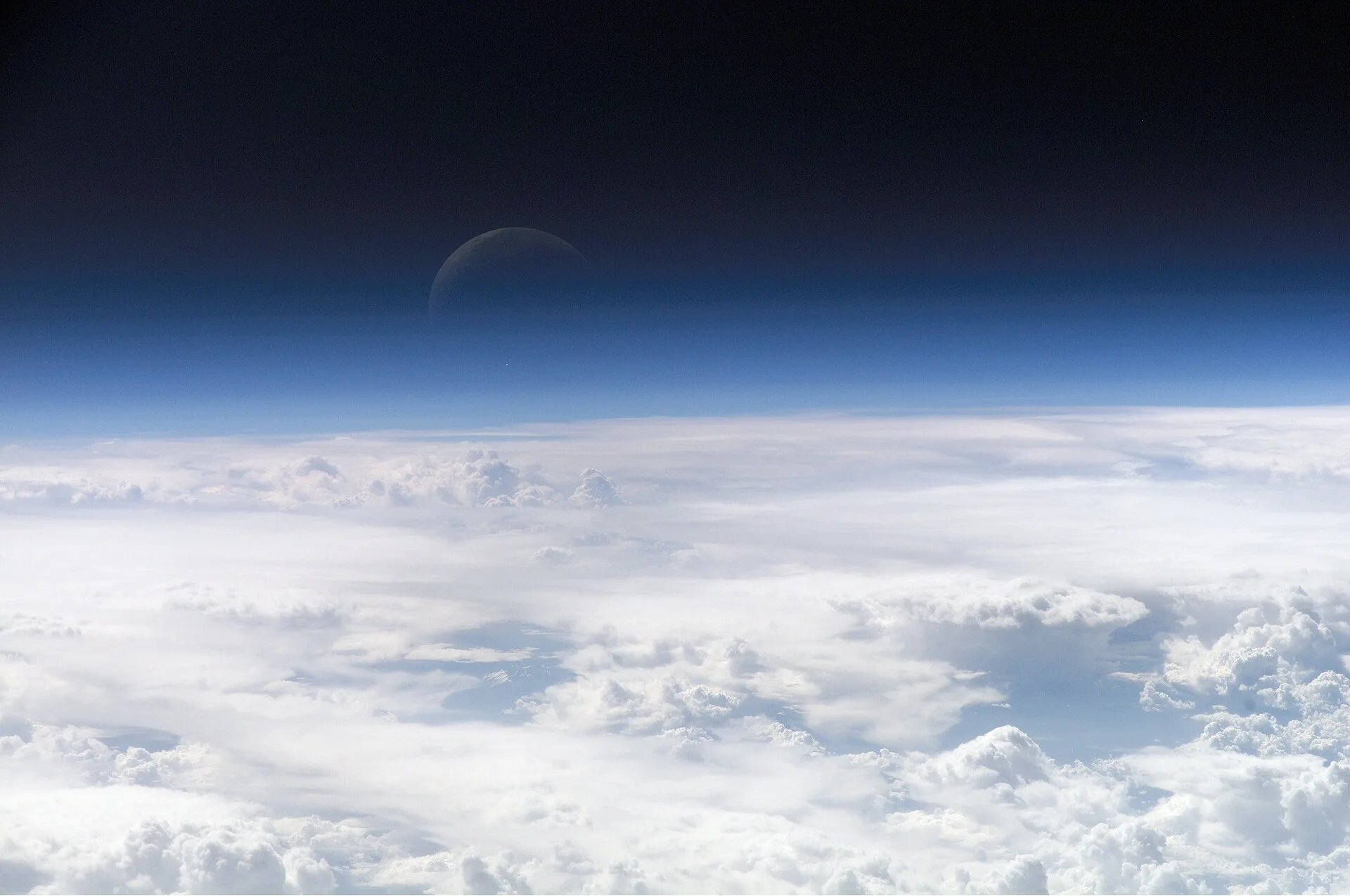
Every cloud begins with air, water and a change in temperature. The familiar shapes above us are evidence of a constantly moving atmosphere.
The first ingredient: moisture
Air contains water vapor even when the sky appears perfectly clear. When air rises, the surrounding pressure decreases and the air expands. That expansion generally causes it to cool.
If the air becomes cool enough to reach saturation, water vapor can condense onto tiny aerosol particles called cloud condensation nuclei. The result is a vast population of tiny droplets; at colder temperatures, ice crystals can also develop.
Why air rises
Sun-warmed ground may create buoyant thermals that produce puffy cumulus clouds. Mountains force air upward, weather fronts lift broad air masses, and large weather systems organize rising motion on even larger scales.
The resulting cloud shape depends on atmospheric stability, humidity, wind and temperature. Strong sustained updrafts build towers. Gentle lifting over broad areas favors sheets and layers.
The sky as a process
Clouds are not static objects. They continuously gain and lose droplets and crystals as air moves through them. A cloud can appear stationary while its particles and surrounding air change.
Not every cloud produces precipitation. Droplets or crystals must grow large enough to fall without evaporating before reaching the ground.