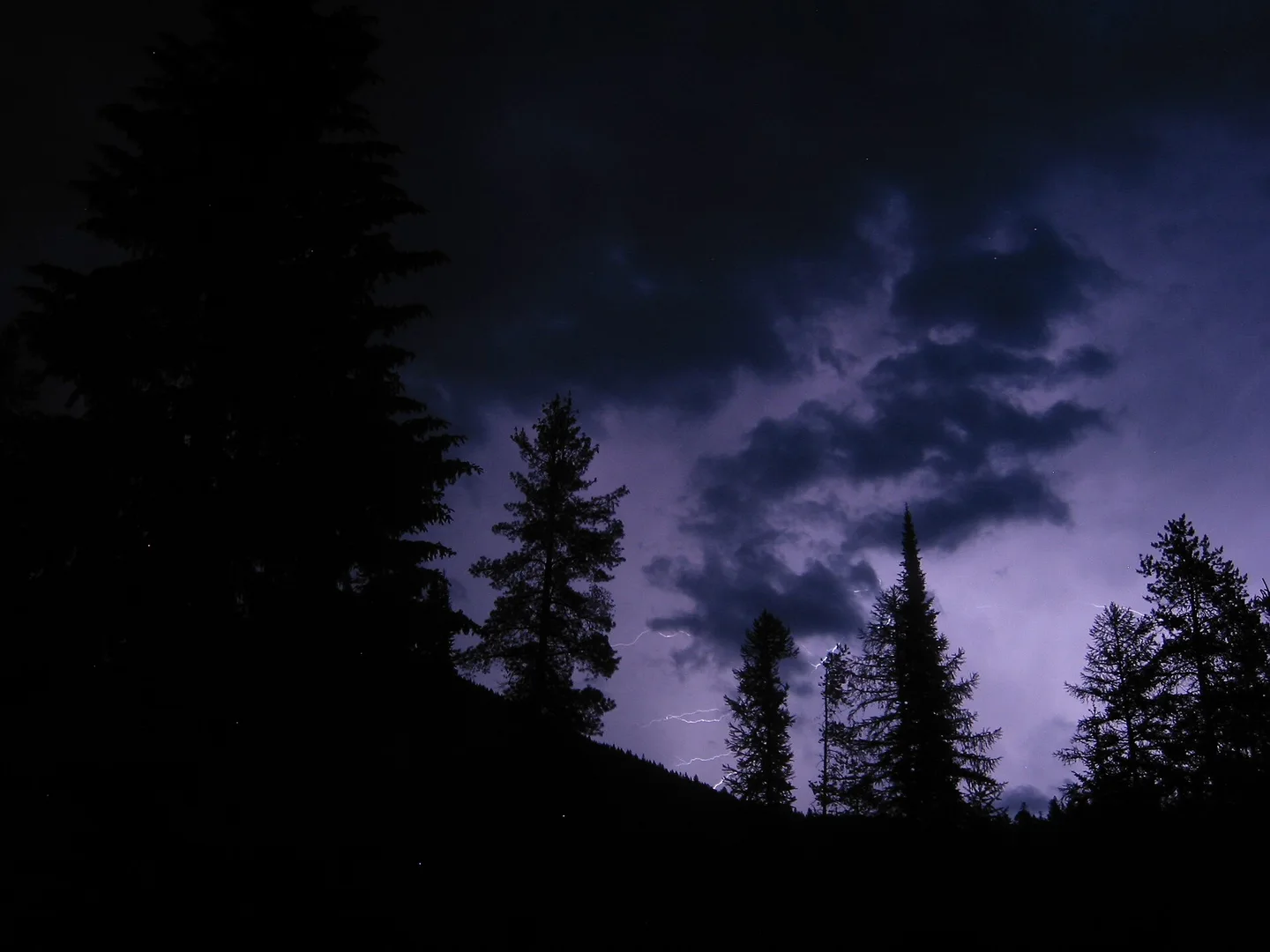
A thunderstorm is a rapidly evolving atmospheric engine: warm moist air rises, water changes phase, and electric charges separate within a deep cloud.
Building a tower
Thunderstorms grow when moist, unstable air rises and reaches the level where condensation begins. The release of latent heat during condensation and freezing can help sustain buoyant updrafts.
As a cumulonimbus develops, its top may spread sideways near the tropopause, where changes in atmospheric stability limit further ascent. This produces the characteristic anvil.
Electricity within the cloud
Collisions among ice crystals, graupel and other particles in a storm help separate electrical charge. When the electric field becomes sufficiently strong, lightning can occur.
Lightning often happens within a cloud. Cloud-to-ground flashes are especially visible, but they represent only part of the electrical activity of storms.
Reading the risks
A storm can bring intense rainfall, damaging wind, hail and lightning, and certain storm environments can also support tornadoes. Not every cumulonimbus produces all of these hazards.
Cloud appearance alone is not a safe basis for real-time decisions. Use official local warnings when thunderstorms threaten.